
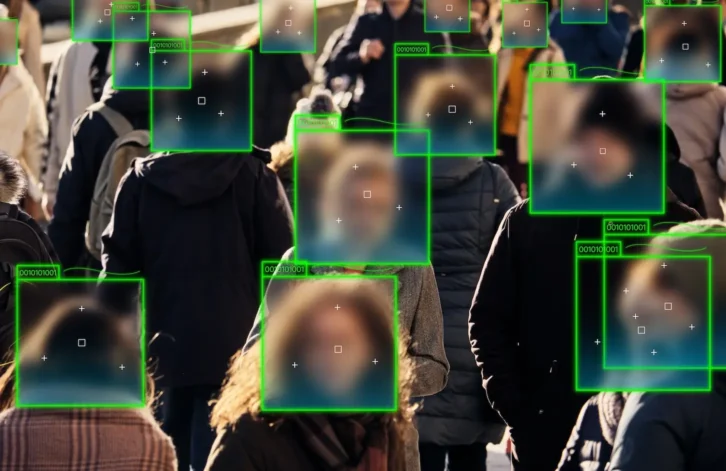
Facial recognition technology (FRT) has been hitting the headlines recently, particularly amid its use by the police, which has sparked debate about the way the technology is used across the board.
Two key questions lie at the heart of this debate. How effective is FRT right now? Will its increased use trigger privacy risks?
On the first issue, there have been many reports of FRT falsely identifying individuals in shops and supermarkets, leading to concerns around its efficacy.
With suggestions that some retailers will soon be adopting FRT solutions that automatically alert the police when an offender triggers a LFR match, it’s clear that this conversation isn’t going away anytime soon.
The public is understandably concerned about how images of their faces will be stored and used. This is where there are notable differences between FRT cameras being used on the public and private businesses deploying FRT to secure access to physical locations.
The former is where a lot of discourse is currently focused, but the latter could suffer unless there is a positive consensus around responsible FRT use.
Public attitudes to FRT
Earlier this year Face Int commissioned a survey finding that while over 70% of respondents support the use of FRT for banking identity checks or to gain access to a secure physical site, just 54% support its use in retail settings for security purposes.
This sends a clear signal: where purpose is transparent and consent is actively given, the public is supportive. Information about how biometric data is processed and stored is usually readily available, providing users with the reassurance.
That same survey found that 61% of UK adults are worried that errors in FRT could get people unfairly in trouble. This movement is becoming so prominent that companies have even started cashing in on the public’s distaste by producing clothing with “adversarial patterns”, to bypass systems.
Path to regulation remains unclear
One argument against the use of FRT comes up time and time again: as with most modern technology, it is being developed and deployed at breakneck speed, while regulation is lagging behind.
Face Int’s research illustrates the need for industry regulation, with 43% of respondents stating that clear laws on how FRT can be used would increase their trust.
This year, the government consulted on a new legal framework for law enforcement use of biometrics, which will go some way to reassure the public about police use of LFR. But, as critics point out, the roll-out of FRT across police forces has continued despite the legal framework not yet being in place.
Any legal changes from the consultation would not apply to the private sector; a huge issue when trying to build trust in the technology. How is the public to trust private sector use of FRT if the organisations deploying it are left to govern themselves?
The public and private sectors are working hard to demonstrate the security of this technology, but if regulation does not catch up, they are simply shouting into a vacuum. It only takes a handful of negative headlines to damage the technology’s reputation as a whole.
Public and private sector collaboration is needed
The EU AI Act will bring in new regulations for the use of biometric AI, including facial recognition, within the bloc, but the path ahead for the UK is uncertain.
While we can look to the EU to understand what kinds of regulations the UK may adopt, the lack of clarity from the government means the path ahead for developers is unclear.
What businesses need is for the government to collaborate with the private sector to ensure that any future regulations work to safeguard the public, and that these safeguards are transparent, with clear penalties for non-compliance.
Interestingly, the EU AI Act’s high-risk AI measures were originally due to come in at the start of August. The can was then kicked down the road until December 2027, in part due to push-back from the private sector, which said they needed more time to adapt.
This is an important lesson for companies: start preparing now, we cannot afford to wait for the government. Companies must deploy FRT responsibly and transparently, ensuring it is highly accurate, and data is stored securely.
The public and private sectors must work together to ensure that it is reliable, that those deploying it do so responsibly, and that regulations protect the public and allow its benefits to be realised.
The stakes for individuals have never been higher, the importance of building public trust must not be underestimated.
Tony Kounnis is the CEO of Face Int UK.